TL;DR: Smoke-only cleanup in Freeport, FL typically runs $300 to $900 for a single contained room (like a stovetop grease fire) and $1,200 to $7,500 for whole-house odor and soot that traveled through the HVAC system. The biggest cost drivers are how far the smoke spread, whether soot settled on porous materials, and which odor-removal method the job needs. Most homeowners policies cover smoke damage restoration when it follows a sudden fire, subject to the deductible.
If a grease fire flared up on the stove, got put out fast, and now the whole kitchen (or worse, the whole house) smells like a campfire even though nothing actually burned beyond the pan, you’re dealing with a smoke-only loss. No structural fire damage, no burned framing, just soot film and an odor that won’t quit. That’s a different job than full fire restoration, and it’s priced differently too.
How much does smoke damage restoration cost in Freeport, FL?
Most smoke-only jobs in Freeport fall between $300 and $7,500, with the final number set by how many rooms were affected and how deep the soot and odor penetrated building materials. A single room with light residue costs far less than a whole house where smoke traveled through the duct system overnight.
| Scenario | Typical Cost Range |
|---|---|
| Grease fire smoke, contained to stove and cabinets | $300 - $900 |
| Soot on walls/ceiling, 1-2 rooms, wipe-down and seal | $600 - $1,800 |
| Whole-house smoke odor, no visible soot (traveled via HVAC) | $1,200 - $3,000 |
| Whole-house soot plus heavy odor | $3,000 - $7,500 |
| HVAC and duct cleaning after a smoke event | $450 - $1,200 |
| Contents and clothing cleaning (per load or whole-household) | $75 - $300 per load, $500 - $2,500 whole-house |
These are typical industry ranges reported across Florida restoration jobs, not a quote. Every loss is different, and Veterans Remediation & Restoration provides a written scope before any work starts so you know exactly what you’re paying for.
If the fire actually damaged framing, drywall, or structural materials rather than just producing smoke, that’s a different cost picture; see our fire damage restoration cost guide for Freeport for structural fire pricing.
What drives the price up or down?
The cost swings on how far the smoke traveled and what kind of residue it left behind, not on how big the original fire was. A tiny grease fire that ran the HVAC fan for twenty minutes can spread soot further than a bigger fire that stayed contained to one room with the AC off.
A few specific factors matter most:
- Smoke type. Protein smoke from a grease or kitchen fire leaves an invisible, greasy, strong-smelling film that’s notoriously hard to clean off cabinets and hard surfaces. Synthetic smoke (from burning plastics or electronics) tends to be oily and acidic. Wood-smoke residue is drier and usually responds better to standard cleaning.
- Whether the HVAC ran during or after the fire. If the air handler cycled while smoke was present, soot and odor get pulled into the ductwork and pushed into every room on that system, turning a one-room job into a whole-house job.
- Surface type. Hard, non-porous surfaces (tile, sealed wood, glass) clean up fast. Porous materials (unpainted drywall, carpet, upholstery, grout) absorb odor and often need sealing or replacement rather than just cleaning.
- Which odor-removal method the job needs (more below), since equipment time and consumables vary a lot by method.
- Whether repainting is needed. If soot discolored painted walls badly enough that cleaning alone won’t restore the finish, the surface needs a stain-blocking sealer primer before repaint. That primer-and-paint step is usually scheduled with a painting contractor once the smoke cleaning and odor work is finished, since it’s a separate trade from the remediation itself.
How does a kitchen grease fire cleanup actually work?
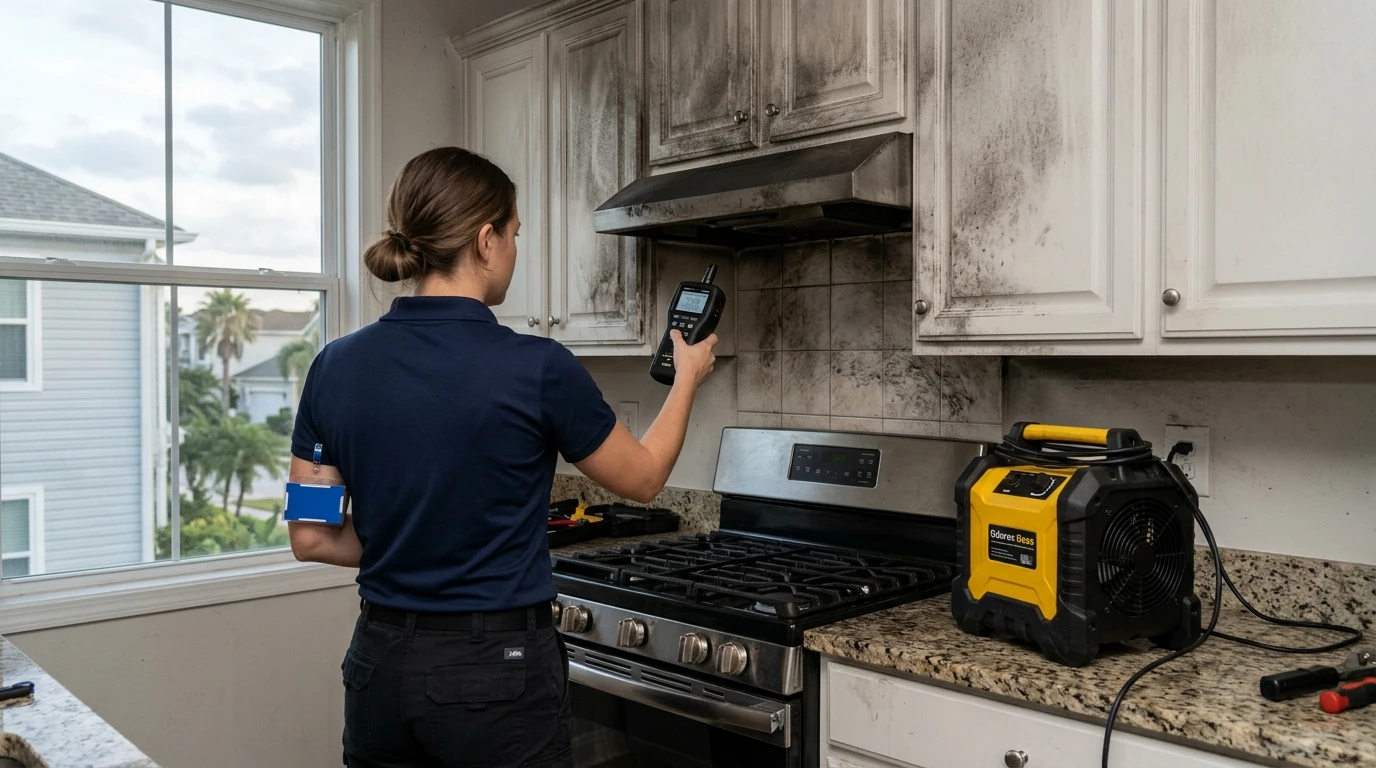
A contained grease fire gets treated as a localized soot and odor job: clean the hard surfaces, deep-clean or replace anything porous nearby, and run odor equipment before closing it out. The scope usually covers the stove, hood vent, upper cabinets, and ceiling directly above the stove, since heat and grease particles rise and settle there first.
The hood vent and any nearby HVAC supply register get inspected, because grease smoke is one of the more common culprits for pulling residue into ductwork even from a small fire. Cabinet interiors near the stove often need degreasing since protein smoke residue is sticky and will re-emit odor if just wiped with water.
Which odor-removal method do you need, and what does it cost?
The right odor method depends on how deep the smoke soaked into the structure, and using the wrong one either wastes money or leaves odor behind. Light surface odor often clears with cleaning alone; deeper, soaked-in odor needs an active deodorizing technology.
- Thermal fogging uses a heated fog that mimics how the smoke originally penetrated the space, reaching into the same cracks and pores the smoke did. It’s typically run once or twice per affected area and priced per treatment.
- Hydroxyl generators produce hydroxyl radicals that break down odor molecules without the ozone exposure risk, so they can run while people and pets are in the home. They’re usually billed as a multi-day equipment rental.
- Ozone treatment is effective on stubborn odor but requires the space to be unoccupied during and for a period after treatment, since ozone is not safe to breathe. It’s often the lower-cost option per treatment but adds a vacate requirement.
Lingering smoke odor is also an indoor air quality issue, not just a nuisance; the EPA has guidance on managing indoor air quality concerns after a smoke event.
Do you need HVAC and duct cleaning after smoke?
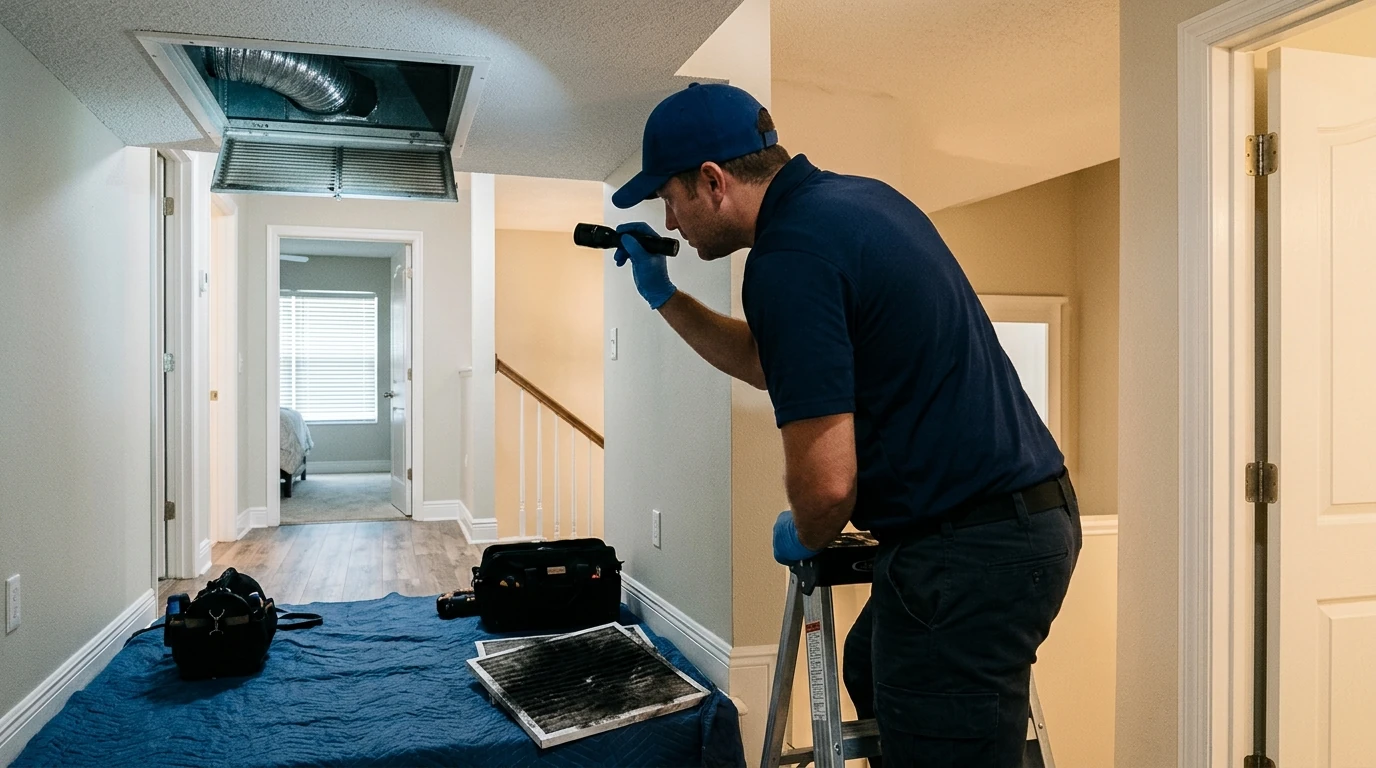
HVAC and duct cleaning is needed whenever the air handler ran during or shortly after the fire, because soot particles get pulled into the return air and coated onto duct interiors and the coil. Skipping it means the system will keep recirculating smoke odor every time it cycles, even after the rooms themselves are cleaned.
A duct inspection (checking the filter, supply registers, and a sample run of ductwork for soot) is the first step. If soot is confirmed inside the system, the ducts, coil, and air handler housing get cleaned before the system runs normally again.
What about contents and clothing?
Soft contents (clothing, curtains, bedding, upholstery) hold smoke odor more stubbornly than hard surfaces and usually need to leave the house for cleaning. Clothing and linens typically go through an ozone chamber or specialty wash cycle designed to break down smoke odor rather than just mask it with detergent fragrance.
Furniture and other larger contents are assessed item by item: some clean up fully, some need targeted odor treatment, and heavily soaked upholstery sometimes isn’t worth saving compared to replacement cost. Photographing everything before it’s moved protects your insurance claim.
Will homeowners insurance cover smoke damage restoration in Florida?
Most Florida homeowners policies cover smoke damage restoration when the smoke came from a sudden, accidental fire, since fire is a standard covered peril, subject to your deductible. What’s typically excluded is damage from a slow-smoldering source over time, or anything the policy treats as a maintenance issue rather than a sudden event.
Document the damage with photos before cleaning anything, keep the receipt from the extinguisher or fire department if one responded, and call your insurer to open the claim. If you run into a dispute over what’s covered, Florida’s Department of Financial Services runs a consumer services division that handles insurance complaints and questions. For a broader rundown on what standard policies include, see our guide on choosing a restoration company in Freeport, which covers what to ask before you sign anything.
What should you avoid doing before a professional assessment?
Don’t wipe dry soot off walls or surfaces, and don’t run the HVAC system before the ducts are checked. Both are the two most common mistakes that turn a small smoke job into an expensive one.
Dry wiping soot grinds the particles deeper into paint, drywall, and fabric instead of lifting them off, which can permanently stain a surface that would otherwise have cleaned up fine. Running the air handler before an inspection pulls any remaining soot through the whole duct system, spreading odor and residue into rooms that were never affected in the first place. Open windows for ventilation if it’s safe to do so, but leave the surface cleaning and the HVAC decision to the assessment.
If you’re smelling smoke through the vents or seeing soot outside the room where the fire happened, that’s usually the sign you need a whole-house assessment rather than a DIY wipe-down. Call Veterans Remediation & Restoration at (337) 344-1248 to schedule one; the team is available 24/7 and will scope the job and document everything your insurance adjuster will need to see.
Professional smoke restoration generally follows the ANSI/IICRC S700 Standard for Professional Fire and Smoke Damage Restoration, which sets the industry benchmark for how smoke-affected structures and contents should be assessed and cleaned. A proper scope follows that process whether the job is one room or the whole house.
About Veterans Remediation & Restoration
Veterans Remediation & Restoration is a veteran-owned and locally owned company serving Freeport, FL and the surrounding Walton County area since 2020. The team is OSHA Trained and available 24/7 for smoke, fire, water, mold, and storm damage calls. Owner Kenneth W Talbot Jr. holds the Florida DBPR Mold Assessor (MRSA5719) and Mold Remediator (MRSR5711) licenses in addition to the company’s restoration service lines, which include smoke damage restoration, fire damage restoration, water damage restoration, storm damage restoration, and crime scene and trauma scene cleanup.
Every loss is different, and the fastest way to get an accurate number for your specific situation is a scope visit, not a phone estimate.