TL;DR: After a house fire in Freeport, FL, call 911 first and wait for the fire department to clear the structure. Next, call your homeowners insurer to open a claim and get a claim number. Then call Veterans Remediation & Restoration at (337) 344-1248 for 24/7 board-up, water extraction, and soot and odor removal. Calling in that order protects your safety and your claim.
If you’re standing outside your Freeport home right now watching Walton County Fire Rescue or the South Walton Fire District wrap up, you’re probably holding a phone and not sure who needs it next. The fire is out, but the water from the hoses is soaking into your floors, soot is settling into fabric and drywall, and your front door might not lock anymore. The next few calls you make, and the order you make them in, affect both your safety and how smoothly your insurance claim goes.
Who do I call first after a house fire in Freeport?
Call 911 first if you haven’t already, and do not re-enter the structure until the fire department or fire marshal says it’s safe. A house fire can weaken floor joists, roof trusses, and electrical systems in ways that aren’t visible from the doorway. Walton County Fire Rescue or South Walton Fire District will typically tell you when it’s cleared for a brief re-entry to retrieve essentials, and they’ll generate the fire report you’ll need later.
Once you have that clearance, your next call is your insurance company, not a contractor. Most homeowners policies require prompt notice of the loss, and the adjuster will want your fire report, the date and cause if known, and photos of the damage before any cleanup starts. The American Red Cross recommends documenting everything you can before items are moved or discarded.
In what order should you call 911, your insurer, and a restoration crew?
The order is 911 and the fire department first, your insurer second, and a restoration company third, because each call depends on information from the one before it. Skipping ahead usually costs you money or slows your claim down.
Here’s why the sequence matters:
- Fire department clearance confirms the structure is safe to approach and gives you the fire report your insurer will ask for.
- Your insurer opens the claim, assigns an adjuster, and tells you what emergency mitigation they’ll authorize before full inspection. Ask directly: “What board-up and water extraction can I authorize right now?” Most policies cover reasonable steps to prevent further damage.
- A restoration crew handles the physical work: securing the property, extracting firefighting water, and starting soot and odor mitigation before it sets permanently into porous materials.
Calling a contractor before your insurer knows what happened can create confusion about what’s covered. Calling your insurer before the fire department clears the home can mean giving an incomplete account of the damage. The U.S. Fire Administration outlines a similar first-24-hours sequence for exactly this reason. If a claim dispute comes up later, Florida homeowners can also contact the Florida Department of Financial Services Division of Consumer Services for help.
What happens when you call a restoration crew?
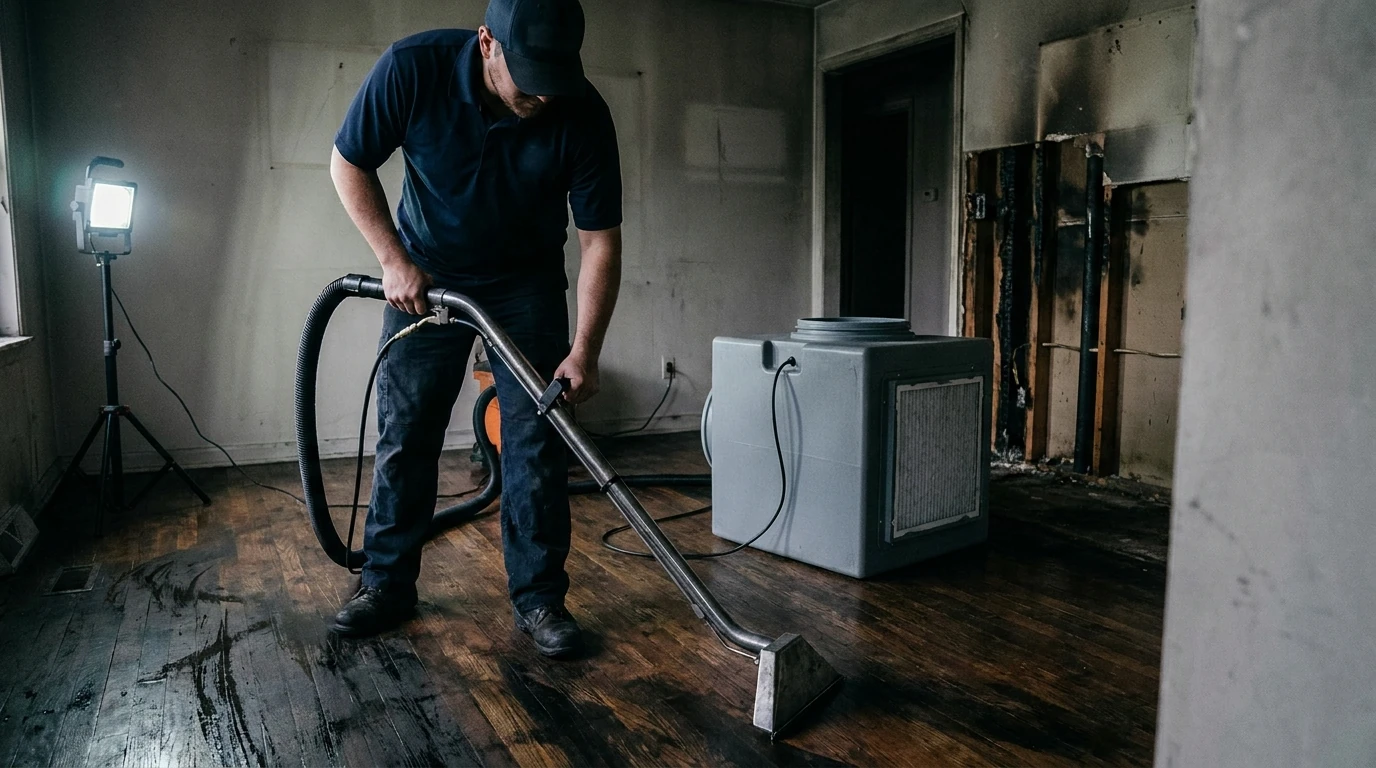
A restoration crew’s first job is to stop secondary damage: securing the structure, extracting standing water, and slowing soot migration before it stains permanently. For an emergency call, Veterans Remediation & Restoration takes calls 24/7 and typically asks for your claim number, the fire department’s clearance, and access instructions before dispatching.
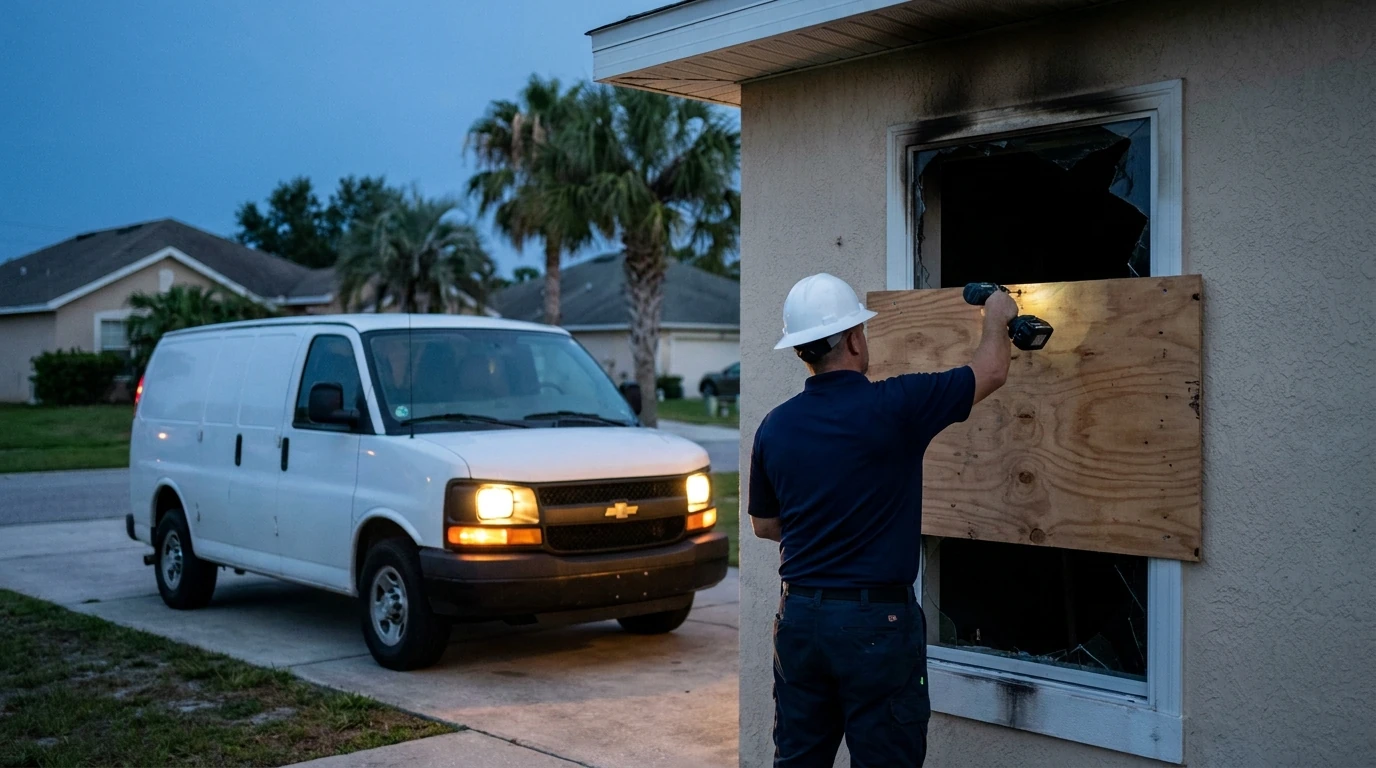
On arrival, the crew usually handles board-up of broken windows or damaged doors first, since an open structure invites weather and theft on top of fire damage. From there, firefighting water gets extracted with pumps and wet-vacuums, since hose water soaks carpet, subfloor, and drywall just like a burst pipe would (see our emergency water removal page for how that extraction and drying process works). Soot and smoke odor get addressed next, often with HEPA vacuuming and air scrubbing before any rebuild work starts. For the full walk-through of these phases, see our fire damage restoration process post, and our fire and smoke restoration guide for a DeFuniak Springs case that followed the same sequence.
Why does smoke and soot damage keep spreading after the fire is out?
Soot keeps damaging surfaces for days after the flames are out because it’s acidic and still settling into porous materials. Smoke particles are small enough to travel through HVAC ducts and wall cavities, which is why a fire in one room can leave odor and residue throughout the house.
Humidity and temperature changes make this worse. Soot residue on metal fixtures, like door hinges or appliance trim, can start etching and corroding within hours if it isn’t cleaned. That’s part of why the call order above matters: the longer the home sits untreated after fire department clearance, the more of this secondary damage becomes permanent rather than restorable.
What should you throw out after smoke damage (and what can be saved)?
Throw out any food, medicine, or cosmetics that were exposed to heat, smoke, or firefighting chemicals, even if the packaging looks intact. Heat can degrade medication effectiveness, and smoke particles can contaminate food and open containers in ways you can’t always see or smell.
Most hard, non-porous items, like metal cookware, glass, and some furniture, can often be professionally cleaned rather than replaced. Soft, porous items like mattresses, upholstered furniture, and stuffed toys are harder to fully deodorize and are frequently a total loss, which your adjuster will want documented before disposal. Don’t discard anything until it’s been photographed for the claim.
If you’re still deciding who to trust with the cleanup itself, our guide on choosing a restoration company covers what licensing and response questions to ask before anyone starts work in your home.
Once the fire department has cleared your property and your insurer has your claim open, call Veterans Remediation & Restoration at (337) 344-1248 for board-up, water extraction, and soot cleanup before the damage sets further into your home.
About Veterans Remediation & Restoration
Founded in 2020 and based in Freeport, FL, the company is a Florida Licensed Mold Assessor and Mold Remediator through the Florida Department of Business & Professional Regulation, with an OSHA-trained crew available 24/7. It handles fire damage restoration, smoke damage restoration, emergency water removal, mold remediation, and storm damage restoration across Walton County and the surrounding Emerald Coast, including Destin, Niceville, and Fort Walton Beach.